Planning a trip around Thailand public holidays can make or break your experience, but knowing the exact dates and what they mean is the real challenge. Thailand observes 16 official public holidays each year, with dates shifting annually based on the lunar calendar.
The most significant, Songkran (April 13-15), draws millions of travelers and locals alike for the world’s largest water fight. This guide covers the Thailand public holidays 2025 calendar, explaining each holiday’s cultural significance and how it affects your travel plans.
Overview of Thailand’s Public Holidays
Thailand public holidays blend Buddhist traditions, royal commemorations, and national milestones. Many follow the lunar calendar, so dates shift each year , for example, Songkran (April 13–15) is fixed, but Visakha Bucha moves.
For 2025, the calendar includes Songkran and several movable Buddhist holidays, making it essential to check the current year’s schedule before planning a trip. The most famous holiday, Songkran, is a nationwide water festival that draws millions of travelers, but it also means crowded streets and higher prices.
Beyond the well-known water festival, holidays like Loi Krathong and Yi Peng offer unique cultural experiences but are not official public holidays , they are widely celebrated. For travelers, the biggest impact comes from national holidays like King’s Birthday and Constitution Day, when government offices and banks close.
A common mistake is booking flights without checking the holiday calendar, only to find attractions closed or hotels fully booked. For a complete list of dates and observances, refer to our detailed Thailand holidays guide.
2025 Public Holiday Calendar (Month-by-Month)
Thailand’s 2025 public holiday calendar includes 16 official days off, ranging from the water-soaked chaos of Songkran in April to the candlelit serenity of Visakha Bucha in May. The government releases the confirmed list each year, and for 2025, the dates are fixed , but not all holidays affect travelers equally.
Many visitors assume every holiday means nationwide closures, but only banks and government offices shut down completely; most shops, markets, and tourist attractions stay open.
 Save
Save
Key Holidays by Month
January opens with New Year’s Day (January 1) and a substitute day on January 2. February brings Makha Bucha, a Buddhist holy day when alcohol sales are banned and temples hold evening candlelit processions.
April is dominated by Songkran (April 13–15), the Thai New Year and the country’s biggest water festival , expect road closures, soaked streets, and a three-day party. May includes Visakha Bucha (May 11) and the Royal Ploughing Ceremony (May 12), a Brahmin ritual marking the start of the rice-growing season.
July has Asahna Bucha (July 10) and the start of Buddhist Lent (July 11). August celebrates Her Majesty the Queen’s Birthday (August 12), also observed as Mother’s Day.
October marks King Bhumibol’s Memorial Day (October 13) and Chulalongkorn Day (October 23). November features Loi Krathong (November 5) , not an official holiday but widely celebrated , and Constitution Day (November 20).
December closes with the King’s Birthday (December 5), observed as Father’s Day, and New Year’s Eve (December 31). For a broader look at festivals beyond official holidays, check out our Thailand festival calendar.
Which holidays actually affect your travel plans? Songkran is the most disruptive , roads close, water fights rage, and public transport fills up weeks in advance.
Buddhist holidays like Visakha Bucha and Asahna Bucha mean alcohol bans and temple crowds, but otherwise life continues normally. Loi Krathong in November is more serene than Songkran’s chaos, with floating lanterns and river ceremonies.
Knowing the calendar helps you plan around closures or lean into the festivities. Songkran is the biggest of them all, and we’ll dive into that next.
Songkran: Thai New Year (April 13-15)
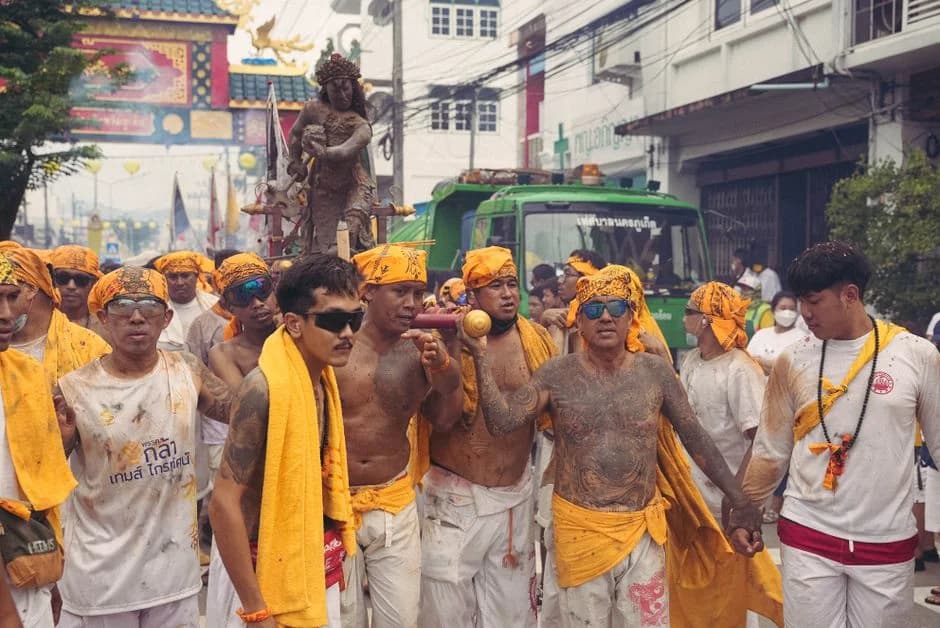
Songkran, the Thai New Year, falls on April 13-15 each year and is the most important of all Thai public holidays. The streets transform into a nationwide water fight, with the air filled with laughter and splashing water.
But Songkran is more than just a party. It’s a time for family reunions, temple visits, and the traditional Rod Nam Dum Hua ceremony where younger generations pour scented water over elders’ hands as a sign of respect.
Many visitors arrive expecting only chaos and miss the deeper cultural significance.
Traveling during Songkran means adjusting your plans. Many shops, banks, and government offices close for the three days, and public transport can be disrupted by water fights and road closures.
If you’re in Thailand during this period, pack waterproof bags for your phone and wallet, and expect to get soaked everywhere you go. For a deeper understanding of the traditions, check out our guide to Thailand cultural etiquette before you travel.
The water fights are most intense in Chiang Mai and Bangkok, but every province celebrates with its own local flavor. Songkran dates Thailand are fixed, so plan your trip around April 13-15 if you want to join the fun, or avoid it if you prefer quiet.
After the water settles, November brings a different kind of magic with Loi Krathong and Yi Peng.
Loi Krathong and Yi Peng (November)
Loi Krathong and Yi Peng are Thailand’s most visually stunning festivals, both tied to the November full moon. Loi Krathong involves floating decorated baskets (krathong) on rivers and canals, while Yi Peng, centered in Chiang Mai, releases thousands of paper lanterns (khom loi) into the night sky.
In 2025, Loi Krathong falls on November 5, with Yi Peng celebrations often stretching several days before and after. The smell of incense and the glow of candlelight on the water create an unforgettable atmosphere.
Many travelers plan their entire trip around these dates, but a common mistake is assuming everything happens on one night. In Chiang Mai, the lantern release and parades span three to five days, so check the local schedule.
Expect crowds to peak on the full moon evening , book accommodation months ahead. A krathong costs around 50–200 baht, and you can buy one at any riverfront market.
For the best experience, head to the Ping River in Chiang Mai or the ancient moat in Sukhothai.
These November festivals are a highlight of the Thai public holiday calendar, even though they are not official days off. The royal holidays that follow in December carry their own cultural weight, but nothing matches the magic of lanterns drifting upward under a full moon.
King’s Birthday and Other Royal Holidays
Among Thai public holidays, the King’s Birthday on July 28 is one of the most important. In the 2025 calendar it falls on a Monday.
Government offices, banks, and post offices close, but most tourist attractions and shopping malls stay open, a common surprise for visitors. The day is marked by merit-making at temples, alms-giving, and public ceremonies.
You’ll see yellow flags and portraits of the King everywhere, so understanding the cultural etiquette around royal celebrations is important: see our guide on Thailand cultural etiquette for more.
Two other royal holidays are widely observed as public holidays in Thailand. Queen’s Birthday on August 12 is also Mother’s Day (Wan Mae), with family gatherings and temple visits.
King Bhumibol’s Birthday on December 5 is Father’s Day and a quieter public holiday. Both days see closures of government offices, but the atmosphere is more subdued than the King’s Birthday, so expect local celebrations rather than large-scale events.
These fixed-date holidays are easy to plan around, unlike the lunar-based Buddhist holidays. Buddhist holidays shift annually and bring their own unique observances and travel impacts.
That’s what we’ll look at next.
Buddhist Holidays: Visakha Bucha, Asahna Bucha
Among Thailand public holidays, the Buddhist observances of Visakha Bucha and Asahna Bucha carry deep spiritual weight. Visakha Bucha marks the birth, enlightenment, and death of the Buddha, while Asahna Bucha commemorates his first sermon.
In 2025, Visakha Bucha falls on May 12, and Asahna Bucha on July 10. Temples fill with the scent of incense and the soft glow of candlelight during evening processions.
A common mistake visitors make is not realizing that alcohol sales are banned nationwide on these days , even in convenience stores and restaurants.
Visakha Bucha is the more widely observed of the two, drawing larger crowds to temples across the country. These are known as Wan Phra (holy days) in Thai, and many Thais visit temples to make merit, listen to sermons, and participate in candlelit circumambulations.
If you’re traveling during these dates, expect government offices and banks to close, and plan your evening activities accordingly , bars and clubs typically shut down. These Buddhist holidays are just one part of Thailand’s rich calendar.
The national holidays that follow carry their own historical weight.
National Holidays: Chakri Day, Coronation Day, Constitution Day
Chakri Day (April 6), Coronation Day (May 4), and Constitution Day (December 10) are three of Thailand’s most significant national holidays, but they’re surprisingly low-key. In 2025, Chakri Day falls on a Sunday, so the observed holiday shifts to Monday April 7 , a detail many travelers miss.
These days commemorate the founding of the Chakri Dynasty, the king’s coronation, and the adoption of the constitution, respectively. Most visitors assume they involve parades or fireworks, but the reality is quieter: government offices and banks close, while tourist attractions and transport run as usual.
If you’re looking for a lively festival, these aren’t it , but they’re still worth knowing about when planning your Thailand public holidays 2025 calendar.
Each holiday carries distinct cultural weight. Chakri Day (Wan Chakri) honors the current dynasty, with ceremonies at the Grand Palace.
Coronation Day marks the anniversary of King Maha Vajiralongkorn’s coronation in 2019. Constitution Day celebrates Thailand’s transition to a constitutional monarchy in 1932 , it’s the least observed of the three, often treated as a long weekend.
The travel impact is minimal: expect closures at banks, post offices, and government museums, but 7-Eleven, shopping malls, and most restaurants stay open. This trio forms the backbone of Thailand’s national holidays list, so check opening hours if you plan a museum visit on these dates.
For most travelers, these holidays won’t disrupt your itinerary , they’re more about understanding local culture than avoiding crowds. The real travel impact comes from holidays like Songkran or the King’s Birthday, which draw bigger crowds and more closures.
For a fuller picture of how these and other public holidays in Thailand affect your trip, the next section covers crowds, closures, and festivities in detail.
How Public Holidays Affect Travel (Crowds, Closures, Festivities)
Thailand public holidays 2025 bring a mix of vibrant celebrations and practical disruptions that every traveler should plan for. Thai public holidays like Songkran (April 13–15) transform cities into massive water fights, with road closures, packed trains, and a surge in accommodation prices.
A common mistake is assuming all holidays are festive , Buddhist holidays like Visakha Bucha impose an alcohol ban and temple closures, so you’ll want to stock up beforehand. Crowds peak during Songkran and Loi Krathong, while quieter holidays like Chakri Day see minimal impact.
 Save
Save
Loi Krathong and Yi Peng in November draw huge crowds to Chiang Mai and Sukhothai, but also mean higher prices and limited accommodation. The night sky fills with floating lanterns during Yi Peng, a sight that’s unforgettable but also a logistical challenge.
Buddhist holidays like Asahna Bucha are less disruptive than Songkran but still affect alcohol sales and entertainment venues. The King’s Birthday on July 28 is a national holiday with celebrations and some closures, while Coronation Day and Constitution Day are more subdued.
Understanding these patterns helps you decide when to visit. If you want to join the festivities, plan ahead for crowds and closures.
If you prefer quiet, avoid major holiday weeks. The next section covers tips for traveling during Thai holidays, so you can navigate them like a pro.
Tips for Traveling During Thai Holidays
Traveling during Thai public holidays means adjusting your plans around closures and crowds. The biggest mistake visitors make is treating Songkran like a non-stop party.
It’s also a time for family and religious ceremonies, so many shops and restaurants shut down for days. Plan around the official Songkran dates (April 13-15) as of 2025 and expect travel disruptions across the country.
For quieter Buddhist holidays like Visakha Bucha and Asahna Bucha, alcohol sales are banned and entertainment venues close, which catches many tourists off guard.
Book accommodation and transport well in advance for major holidays like Songkran and Loi Krathong. Prices can double and availability shrinks fast.
Government offices and banks close on all national holidays, including Chakri Day, Coronation Day, Constitution Day, and the King’s Birthday, so handle any official business before or after. If you’re flexible, traveling during a Buddhist holiday can offer a more authentic experience with fewer tourists, as long as you respect local customs.
That combination of planning and cultural awareness makes all the difference.
Always check the official Thailand holiday calendar before finalizing your itinerary. Some holidays like the King’s Birthday involve grand ceremonies that are worth seeing.
For Loi Krathong and Yi Peng, book your spot in Chiang Mai months ahead; it’s the most popular destination. And remember that alcohol bans on Buddhist holidays apply nationwide, so stock up beforehand if you plan to drink.
FAQ
Are all public holidays in Thailand observed on the same date each year?
No, not all. Thailand’s public holidays fall into two categories: fixed-date holidays like New Year’s Day (January 1) and lunar-based holidays like Visakha Bucha, which shifts each year. The government also occasionally adds extra holidays for special occasions, so it’s worth checking the official public holiday calendar annually.
Are there any public holidays in Thailand that are not widely celebrated?
Yes, some holidays like Constitution Day and Chulalongkorn Day are observed as official days off but see little public celebration. Most Thais use these as long weekends for travel rather than festive activities. In contrast, Songkran and Loi Krathong are major celebrations with widespread participation.
What is Makha Bucha Day and when is it observed?
Makha Bucha is a major Buddhist holiday commemorating a spontaneous gathering of 1,250 disciples before the Buddha. It falls on the full moon of the third lunar month, usually in February or March. On this day, alcohol sales are banned and many Thais visit temples for merit-making.
Do businesses and attractions close on Thai public holidays?
It depends on the holiday. Government offices, banks, and post offices always close. Many shops and restaurants remain open, especially in tourist areas like Bangkok and Chiang Mai, but smaller family-run businesses may close for major holidays like Songkran. Museums and national parks often close on Buddhist holidays, so check ahead.
What is the difference between a national holiday and a Buddhist holiday in Thailand?
National holidays like Chakri Day and Coronation Day celebrate historical events or the monarchy and are observed with official ceremonies. Buddhist holidays like Asahna Bucha are religious observances where alcohol sales are prohibited and temple visits are common. Both are public holidays, but the atmosphere differs significantly.
What is the complete list of Thailand public holidays for 2025?
The official list for 2025 includes New Year’s Day (Jan 1), Makha Bucha (Feb 12), Chakri Day (Apr 6), Songkran (Apr 13-15), Coronation Day (May 4), Visakha Bucha (May 12), Asahna Bucha (Jul 10), King’s Birthday (Jul 28), Queen’s Birthday (Aug 12), Chulalongkorn Day (Oct 23), Loi Krathong (Nov 5), Constitution Day (Dec 10), and New Year’s Eve (Dec 31). Note that some dates are lunar and may shift slightly.
Photo Credits
Vincent, Maksim
A heartfelt thank you to the talented photographers who made this article visually come to life. Your work is truly appreciated.